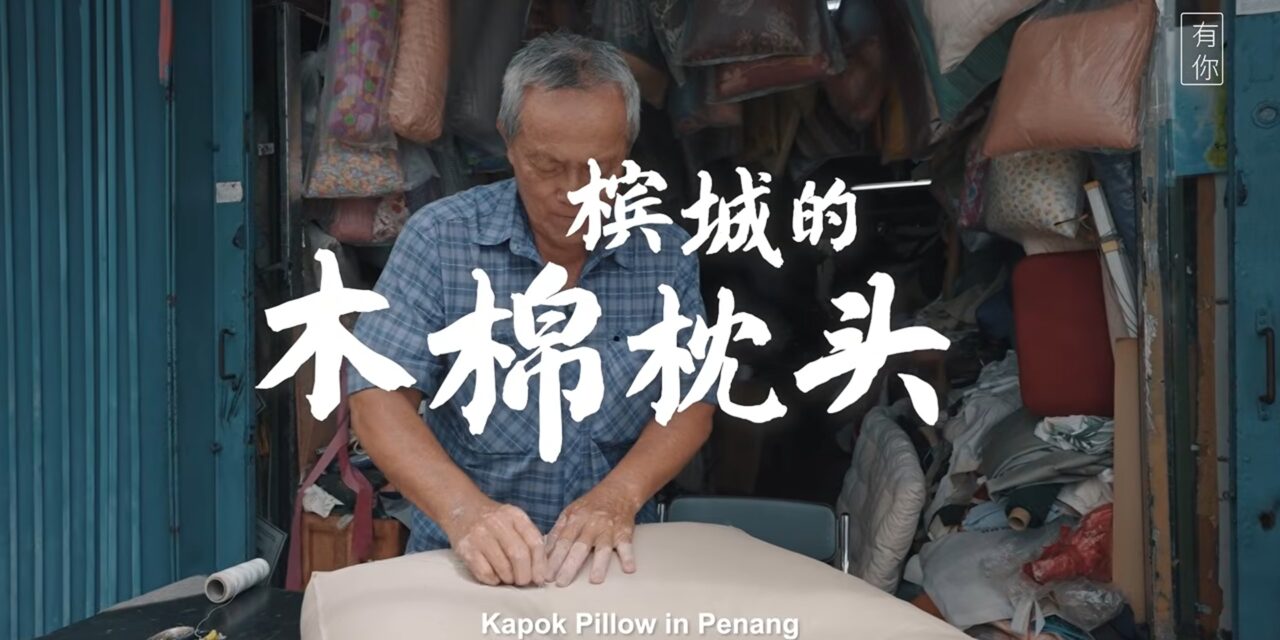
一袋又一袋的木棉,用于填充枕头、抱枕、婴儿床垫等寝具,天然纤维柔软且透气,使人一夜安眠。一代又一代的传承,制作木棉填充的寝具的技艺,随着棉絮纷飞,飘散在槟城乔治市漆木街( Bishop Street)以至义兴街(Church Street)。
郑孙成和郑孙德两兄弟,绵延家传三代的技艺,制作以木棉填充的寝具。若干年前,他们的爷爷郑木城从中国南来,学会制作寝具的手艺,于漆木街开设「合记」养家糊口。父亲郑金由子承父业,叔叔也于相邻的义兴街设「弟装饰」店面。到了他们这一代八兄弟里,郑孙成继承了父亲的店面并更名「合记成」、郑孙德则在叔叔店铺同排开设「薪合记」。
本是同根生,树大分支后,相同的木棉,不同的蔓延。兄弟俩分别经营各自的店铺,所制作的品项也稍有差异。哥哥郑孙成擅长制作婴儿床,也较常接定制订单,如供修行者打坐的禅修垫。弟弟郑孙德一般制作枕头、抱枕,也承接沙发翻新的工作。
昔日,漆木街一带林立四、五间木棉寝具店。「合记」早年曾为鸦片床定制垫褥,亦曾为军事基地、医院和酒店制作床垫。甚至在自由港时期,将作品出口至英国。经历数十年风雨飘摇,见证了产业的萧条、同业的凋零,虽依然伫立,却也濒临消失。
传承的意愿敌不过时代巨轮碾压。一家店面,两夫妻一同打拼,生产能力非常局限。也曾聘请员工,但并不多人接受如此闷热又繁琐的工作。孩子纷纷往外发展事业,身为父母,不忍折断孩子梦想的翅膀。于是,匠人年纪渐长,缺乏新血加入,只接力所能及的订单,勉强糊口度日。
不追求规模与数量,细心缝制,专注于质量。这门手艺至今仍有市场需求,不仅在于能根据顾客的个人喜好,调整填充枕头所需的棉花量。或许需要为特定的家俬量身打造垫褥,甚至依照顾客喜好而采用不同的填充物,如椰丝、羽毛等等。
如今市面上寝具选择多样化,不乏聚酯纤维(polyester)、海绵(foam)或乳胶(latex),还有着不同功能的设计。工厂量产的聚酯纤维枕头物美价廉,昂贵的人体工学寝具也有其受众,而朴实的木棉寝具,多为年长者仍使用。
也许再过几年,乔治市的街头将不见木棉店铺的踪迹,取而代之的是游客打卡的网红店。到时,是否有人会想起,曾经有那么一个家族,投身制作木棉,指尖、针线间,守护人们一夜安眠?
※
【地方小知识】
Bishop Street地名源自罗马天主教神父Arnaud-Antoine Garnault。他于1781年因避难来到吉打,后受莱特上校邀请前往槟城。他被罗马教廷任命为主教(Bishop)后在此设立教区驻所,因此这条街被官方命名为Bishop Street(主教街)。
Bishop Street在十九世纪的槟城乔治市,是繁盛市的商业经济中枢。当时不少上海商人于此开设高档家俬店,售卖手工细致、制作精美、的雕刻木器家具,同时聚居很多漆饰工匠艺人,华社便称之为「漆木街」。
相邻的Church Street,则源自莱特上校在槟城建立的第一间基督教堂。英国人在1786年登临槟榔屿的那一天,刚巧是教会年历的「圣母升天日」,于是建造了一所「圣母升天堂」,后于1850年代拆除并迁至华盖街(Farquhar Street)。
成立于1790年的华人秘密结社义兴公司曾在Church Street设立总部。在全盛时期,槟城高达70%的华人都是该组织的会员,其势力庞大,因此华社直接以「义兴街」来称呼这条街。
—
『书游记』 x 『有你 UNI』
2026年9月,一辆载满书的小卡车,从吉隆坡市中心的二手书店BooKu出发,一路经槟城岛读书店、怡保小小书店、峇株巴辖亣亣书册,再回到雪隆区,巡回四个书店站点,用线下活动带你一起探索一座似旧又新的城镇。
【书游记】
日期:2026年9月5日至27日(逢周六周日)
时间:11am – 7pm
地点:槟城岛读书店、怡保小小书店、峇株巴辖亣亣书册、吉隆坡BooKu书店
—
☕ 支持 有你 UNI 继续记录马来西亚的故事
喜欢这则故事,欢迎请我们喝杯咖啡:
https://uni.gallery/coffee/1203
※※※
Pillows, bolsters, baby cots et cetera are stuffed with kapok, whose natural fibres provide soft and breathable comfort for a good night’s sleep. The craft of making kapok-filled bedding goods is passed down from generation to generation, spreading from Bishop Street to Church Street in Georgetown, Penang.
Two brothers, Teh Soon Seng and Teh Soon Teik, are the third generation to continue their family legacy, producing bedding goods stuffed with kapok. Over a century ago, their grandfather migrated to Penang from China, learned the craft of making bedding goods, thus establishing Hup Kee at Bishop Street, and raised a family. Their father followed in their grandfather’s footsteps, as well as their uncle, who set up Tee Decorations at the neighbouring Church Street. Among their eight siblings, Teh Soon Seng inherited his father’s shop and renamed it to Hup Kee Seng, while Teh Soon Teik set up Sim Hup Kee a few doors away from their uncle.
Branching out from the same family, the two brothers each manage their own store, the products they offer also differ slightly. Teh Soon Seng, the elder brother, specialises in making baby cots, and often takes in orders for custom-made products, such as meditation cushions. Teh Soon Teik, the younger brother, makes general items such as pillows, bolsters, and mattresses, as well as reupholstery.
In the past, there were four to five kapok bedding shops on Bishop Street. Hup Kee used to produce customised cushions for opium armchairs, as well as mattresses for military bases, hospitals, and hotels. During the free port era, Hup Kee even exported their products to the United Kingdom. After decades of ups and downs, witnessing the decline of the industry and the demise of their peers, Hup Kee is still standing, albeit on the verge of disappearing.
The willingness to uphold traditional craft is unable to withstand the crushing wheels of time. A shop manned by only a husband and wife duo possesses extremely constrained production capacity. They tried hiring employees, but many are reluctant to take on such a stifling and tedious job. Their children built their own careers, so as parents, they just have to let go. Without new apprentices, as they gradually age, they can only accept orders within their capabilities, barely making ends meet.
Instead of pursuing scale or quantity, they focus on meticulous sewing and quality. This craft still has market demand today, not only because the amount of fillings can be adjusted according to the customer’s preferences, but they also provide custom-made services for specific furniture, or use different fillings such as coconut fibres or feathers.
(Full article: https://uniness.gallery/kapok-pillow-in-penang/)
—
☕ Support UNINESS to continue documenting Malaysian local cultures
Enjoyed this story? Buy UNINESS a coffee:
https://uniness.gallery/coffee/1361
※※※
#有你UNI #UNIGallery #马来西亚有你 #uniness #uninessmalaysia #有你 #UNI
https://uni.gallery
https://uniness.gallery
© 2026 ECHINOIDEA SDN BHD