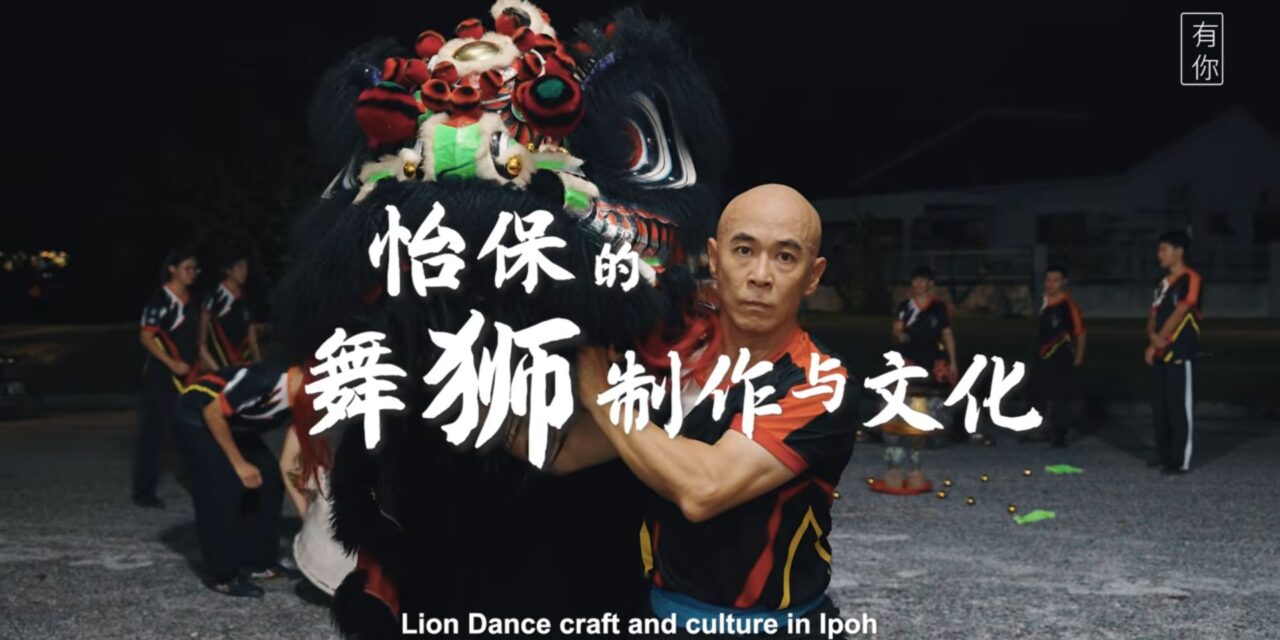
傍晚七点的山城怡保(Ipoh),刚下过雨的空气里还有潮湿的气息。一群青少年聚集在忠圣龙狮神画艺术坊店屋前的空地上,摩拳擦掌。从店屋里搬出所需的兵器及道具后,他们在郑永樑师父的指导下,先练习武术基础招式、舞狮基本动作,再进行采青训练。
练武是舞狮的基底,训练身手的敏捷与耐力,同时决定了狮子的形态和气势。郑师父带领学员们从洪拳入门,学习拳法、步法,以及器械套路。修习武术后,步伐稳健、铿锵有力,能更轻易完成狮头的高难度跳跃或狮尾的负重托举。郑师父坚持传统武术功底教学,不让舞狮失去神韵及内核,只流于形式。他也自觉背负培育新世代的使命,成立了自己的团队——忠圣龙腾武狮育成轩。
授课仅是郑师父的副业,而他的主业是龙狮制作。郑师父自幼对艺术感兴趣,在绘画上颇有天赋。中学时期参与龙狮队,15岁时便自行摸索成功制作第一个龙头,从此萌生往龙狮制作发展的志愿。毕业后,他依然对此满怀热忱。白天四处打工,晚上到武馆练习之余,也承接为学校和其他龙狮队修复旧狮头的工作。同时,在武馆师父、师伯的介绍下,他开始为新加坡的同行制作狮头。攒下一笔积蓄后,即使前景不被看好,他毅然创立了忠圣龙狮神画艺术坊。从1996年4月11日开业,一路坚持走到今天。
无论狮头或龙头,主要的步骤有四个:扎胚、扑纸、写色、装配。即用竹篾扎出骨架、粘上纱布和纱纸、彩绘图案和花纹,再装上牵引构件和绒毛装饰。扎的挑战在于得依照所需的面积大小,先在脑海中构建各个部位的比例。实际操作时,捆扎的角度还得确保左右平衡。粘的时候要确保表面平滑紧致、无皱纹。画时确保下笔均匀,避免颜色深浅不一,或出现刺眼的毛边。装则相对简易,只要确保安装得牢固即可。
郑师父自13岁接触舞狮、舞龙、武术,已经38年,立业也已30年。他维持着简单却充实的生活,每天在店里工作,抽空自己训练,一个星期里教几堂课,偶尔带队参加表演或比赛。随着现代人生活方式、娱乐消遣的转变,对龙狮由衷感兴趣的人越发少见。虽然如此,怡保当地仍有数支龙狮队伍,以不同的形式经营,惟郑师父始终坚持训练传统武术功架。
身为在北马一带少数的专职龙狮制作,郑师父的作品不仅供应本地市场,也远销至新加坡、台湾等地。此外,郑师父还擅长绘制神明画像,不少庙宇、道坛纷纷向他下订单。
是武师,亦舞狮。秉持满腔热诚制作及教习,郑永樑师父以武为基础,稳扎稳打,舞动文化传承。
※
【舞狮小知识】
东汉时期,西域诸国向中原输送狮子作为贡品,民间开始有人模仿狮子的外形与动作进行表演,这是舞狮最早的雏形。
舞狮表演需要狮头、狮尾、鼓乐手和教练高度默契的团队合作。
狮头负责控制狮子的表情,承担大部分托举、跳跃和登高动作,需要极佳的上肢力量与爆发力。
狮尾负责配合狮头的步伐,掌控狮身形态与平衡,支撑狮头完成高难度动作。
鼓乐手负责敲击大鼓、铜锣和钹,音乐与狮子的动作必须严丝合缝。
舞狮的源流有南北之分,形象和动作形态各异。
北狮
又称「圣狮」,盛行于中国长江以北地区的传统舞狮形式。
形象浑身是长毛,兼具雌雄、文武、成幼狮等类别划分。
动作融入杂技,表演涵盖踩球、过跳板等技巧动作。
南狮
又称「瑞狮」,流行于广东一带,注重武术功底。
佛山狮头圆、额宽、嘴较平阔,整体比较饱满。威武勇猛,动作较大。
鹤山狮头较扁长,嘴凸出,较轻巧灵活。温文尔雅,动作细腻。
仅有雄狮,按照粤剧角色分为文武两种狮形。
随着19世纪移民潮传入马来西亚的,便是起源于广东一带,以佛山狮、鹤山狮为代表的南狮。南狮与武馆息息相关,成为练习武术的辅助方法。先打下扎实的基本功,再将武术的招式套入舞狮的动作。
过去,当不同派系的武馆狮队狭路相逢,会斗狮一较高下。随着时代变迁,舞狮不再与斗殴挂钩,从武馆走进社区和校园,形成青少年锻炼身体的健康文化。
※
【采青】
逢年过节,或是店铺开张,会请舞狮队进行表演,以驱邪避害、纳福迎祥。其中最精彩的环节——采青,即让狮子破解套路,捕获食物。一般用生菜(寓意生财)、柑橘(寓意吉利),或以红包代替。
※
【狮头规格】
一般分为一号(大)、二号(中)、三号(小)。
如今普遍流行的是二号、二号半,青少年则舞三号。
为了配合幼童,或是用作装饰,衍生出四号、五号、六号等更小的尺寸。
—
☕ 支持 有你 UNI 继续记录马来西亚的故事
喜欢这则故事,欢迎请我们喝杯咖啡:
https://uni.gallery/coffee/1208
※※※
It’s 7PM in the city of limestone peaks — Ipoh, the air is still damp after rain. A bunch of eager youths gather at the space in front of the row of shophouses in which Zhong Shen Trading nestled. After bringing out various props, they start practicing basic martial arts and lion dance moves under the guidance of Master Teh Wing Liang, then proceeding to train for plucking the Green.
Practicing martial arts is the foundation of lion dance, enhancing agility and endurance, which is crucial to the lion’s posture and aura. Master Teh leads his disciples through the routines of Hung Gar, comprising punches, footwork, as well as weapons. After practicing martial arts, their footsteps became steady and vigorous, making it easier to execute high-difficulty leaps as the lion head or handle the heavy lifting as the lion tail. Master Teh insists on solid training in traditional martial arts, ensuring lion dance keeps its true spirit and inner core instead of becoming just a superficial show. He also feels committed to nurture the next generation, hence establishing his own troupe — Zhong Shen Martial Arts and Lion Dance Academy.
Teaching is just a side project to Master Teh, whose main job is crafting lion dance heads. Since a young age, he is immensely interested in arts, and has a knack for painting. During secondary school, he joined the lion and dragon dance troupe, and succeeded in crafting a dragon head from scratch at the age of 15. From that moment on, an ambition to pursue a lifelong career in crafting was sparked. After graduation, his passion did not fade. During the day, he works various odd jobs, and in the evening, besides practicing at the martial arts association, he also restores dilapidated lion heads for schools and other troupes. Meanwhile, having been introduced by his master from the martial arts association, he began crafting lion heads for troupes in Singapore. He managed to save up a sum of money and established Zhong Shen Trading on April 11, 1996 despite uncertain prospects and persevered all the way to this day.
Be it lion head or dragon head, the four main steps are: framing, pasting, painting, and decorating. Construct the frame with bamboo strips, paste fabric and paper to form the base, hand-paint colours and patterns, and then install the components and decorative accessories. When constructing the frame, the challenge lies in mentally visualising the proportions of each part according to the required dimensions. Achieving properly balanced structural angles when binding bamboo strips together is equally critical. When pasting, ensure the surface is smooth, taut, and wrinkle-free. Paint with even strokes to ensure uniform colour and avoid jagged edges.
(Full Article: https://uniness.gallery/lion-dance-craft-and-culture-in-ipoh/)
—
☕ Support UNINESS to continue documenting Malaysian local cultures
Enjoyed this story? Buy UNINESS a coffee:
https://uniness.gallery/coffee/1368
※※※
#有你UNI #UNIGallery #马来西亚有你 #uniness #uninessmalaysia #有你 #UNI
https://uni.gallery
https://uniness.gallery
© 2026 ECHINOIDEA SDN BHD